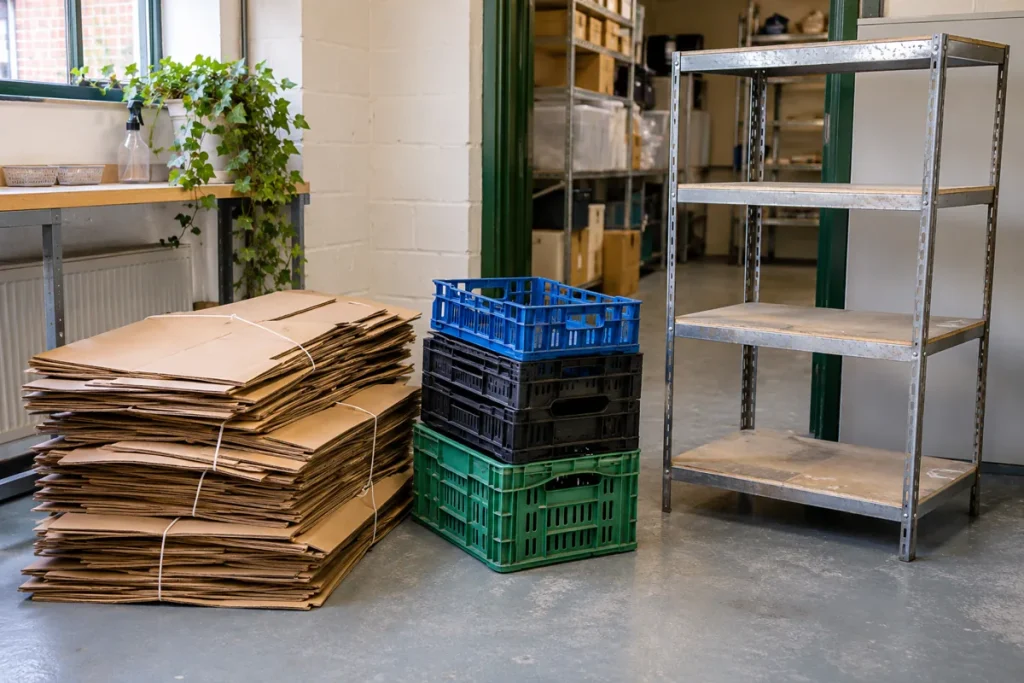
Stocktakes often reveal the items that never made it out of the back room. Empty crates pile up behind shelving, boxes from old deliveries fill a corner and spare display units take up floor space. Before booking, decide which items can go and which still belong to the business or a supplier.
Check what needs returning
Separate reusable crates, pallets or equipment that suppliers may collect. Ask the person responsible for stock before including anything that is still recorded in the inventory. Check boxes for paperwork and personal items, and keep confidential material separate from the general load.
Make a short list for the quote
Group flattened cardboard, empty boxes, broken shelving and other items by type. Tell us how much there is, whether it can be reached easily and if anything is unusually heavy. We can assess one-off business waste collection once we know the postcode, loading route and what you want collected.
Keep work moving around the collection
Choose a time when the stockroom can be accessed without blocking deliveries. Tell us if we need to use a shared corridor, goods lift or service entrance. Mark what stays and let us know if the pile grows between your first photos and the day of collection.
Keep regular recycling separate from the clearout
Say you have ten empty cartons and a broken shelving unit after a stocktake. The cartons may already belong in your usual recycling stream, while the shelving needs its own collection. Ask whoever manages the existing service what can go in the regular containers. Then send us the list of what is left, with photos showing how much space it occupies.
If the clearout has highlighted problems with everyday waste, the GOV.UK workplace recycling guidance for England explains how to arrange the separate streams. Keep that routine plan distinct from the one-off job, so staff know where to put new packaging after the space is cleared.
Related guide: Planning a waste collection after a shop refit.