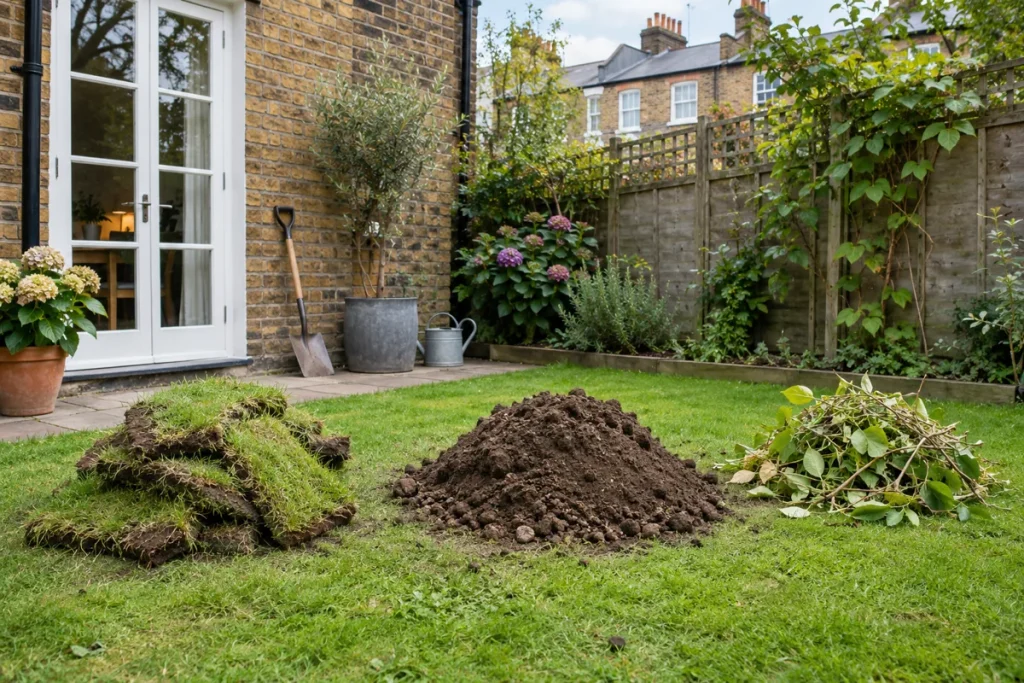
After a garden project, leaves, loose soil and rolls of turf can look like one pile of garden rubbish. It is easier to discuss the job when you describe each material separately. The amount of space it occupies is only part of the picture. Weight and access also matter.
Identify the heavier materials
Tell us how much of the load is soil, turf, stones or rubble. Say whether it is loose or bagged. Show the full pile and mention if the bags are wet or unusually heavy. Keep that information separate from the description of leaves, twigs and light plant cuttings.
Mention what else came out of the garden
Old pots, timber and furniture may need to be assessed separately from green waste. If the job includes broken paving or renovation debris, point that out as well. Our green waste collection service can discuss the contents with you and confirm what we can include.
Show us the loading route
Tell us how far the materials are from the street and whether there are steps or a narrow gate. If there is limited access to the back garden, include a photo from the gate towards the pile. You can ask about the quote before moving heavy materials to a different spot.
Check where each material can go
After replacing a lawn, you might have six rolls of turf, two bags of loose soil and a pile of cuttings. Photograph the three groups and say whether broken paving is mixed in. If a contractor did the work, ask whether waste collection was included before you arrange another booking.
If you plan to take some of it yourself, check which materials your borough’s recycling centre accepts and whether you need to book. The GOV.UK guide to household waste explains how to find local options. Rules for garden cuttings can differ from the arrangements for soil or DIY waste, so confirm what applies to your load.
Related guide: Preparing hedge cuttings and branches for collection.