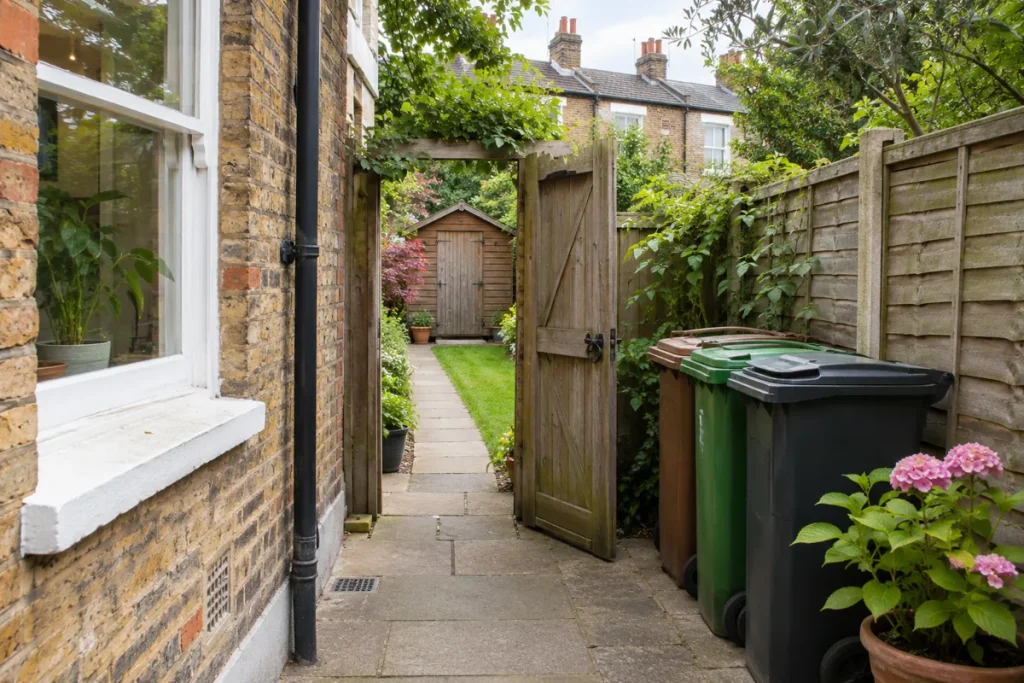
A shed may have wide doors and still be awkward to clear if the route out is narrow. Think about the whole path from the shed door to the vehicle. A low gate, a corner near the house or several steps can be more relevant than the size of the shed itself.
Walk the route without carrying anything
Look for the narrowest point and take a photo from each direction. Tell us whether the gate opens fully and whether there is another way out. If access passes through the house or a shared area, say so at the quoting stage. There is no need to try moving a heavy item yourself to see if it fits.
Identify pieces that are hard to move
Send the size and a photo of large shelving, a workbench or bulky garden furniture. Tell us whether they are already in parts or still assembled. Our garden shed clearance service can use the item and access details to assess the job together.
Agree the access before the appointment
Let us know who can open the gate and where the nearest loading point is. If a different route becomes available, share the details before we arrive. Keep any fragile plants or belongings away from the path where practical and confirm which items we are taking from the shed.
Check whether you are booking contents or a structure
An old workbench may be the biggest thing to come out of the shed, but the job changes if you also want the building removed. Photograph the roof, walls and base from the outside and tell us whether the shed is attached to a fence or another structure. Keep the contents list separate so we can discuss that part even if the building needs further assessment.
If you suspect the roof or panels contain asbestos, leave them undisturbed. We do not collect hazardous waste. The HSE asbestos advice for members of the public explains where to seek help before anyone works on the structure.
Related guide: How to sort what is inside a garden shed.