
London is at the forefront of a transformative shift toward sustainable production and consumption, embracing a model that prioritizes reusing, repairing, refurbishing, and recycling materials to extend their lifecycle. This approach, known as the circular economy, redefines growth by focusing on environmental sustainability and societal benefits, offering a blueprint for urban development amid challenges like climate change and resource scarcity. By adopting innovative practices, London is turning waste into valuable resources and fostering new job opportunities. This movement, supported by strategic partnerships and city-wide initiatives, positions the city as a global leader in sustainable urban development. Below, we explore how the circular economy in London is shaping a greener, more resilient future.
Key Takeaways
- London leads globally in transitioning to a sustainable, regenerative economic model.
- This approach shifts away from the linear “take-make-dispose” system to one that prioritizes resource efficiency.
- Initiatives in London are creating a model for sustainable urban development worldwide.
- The city addresses waste and overconsumption through innovative resource management.
- Residents and businesses are finding creative ways to close resource loops and generate value.
Understanding London’s Vision for a Circular Economy
The circular economy in London is a cornerstone of the city’s ambition to become a zero-carbon city by 2030. Supported by the Mayor’s Green New Deal, this vision promotes projects that create jobs and empower businesses and residents to thrive in a sustainable future. A YouTube video highlights how these efforts are driving economic and environmental progress. https://youtu.be/nl1YmyYwefY
What Is a Circular Economy?
A circular economy reimagines traditional economic systems by eliminating waste and pollution through design. Unlike the linear model of extracting resources, producing goods, and discarding them, this approach keeps materials in use through reuse, repair, refurbishment, remanufacturing, and recycling. By conserving resources, it reduces environmental impact while fostering innovation and economic opportunities.
London’s Commitment to Sustainable Practices
The circular economy in London is deeply integrated with its climate goals. The London Plan, a strategic framework for the city’s development, includes a pioneering requirement for large-scale developments to submit a circular economy statement. This ensures that sustainability is embedded in planning and development processes. Collaboration between government, businesses, and citizens is central to this transition, delivering both environmental and economic benefits across sectors like construction, food, textiles, electronics, and plastics. For more insights on sustainable urban planning, explore our guide to green cities.
London’s Framework for a Circular Economy: Key Initiatives
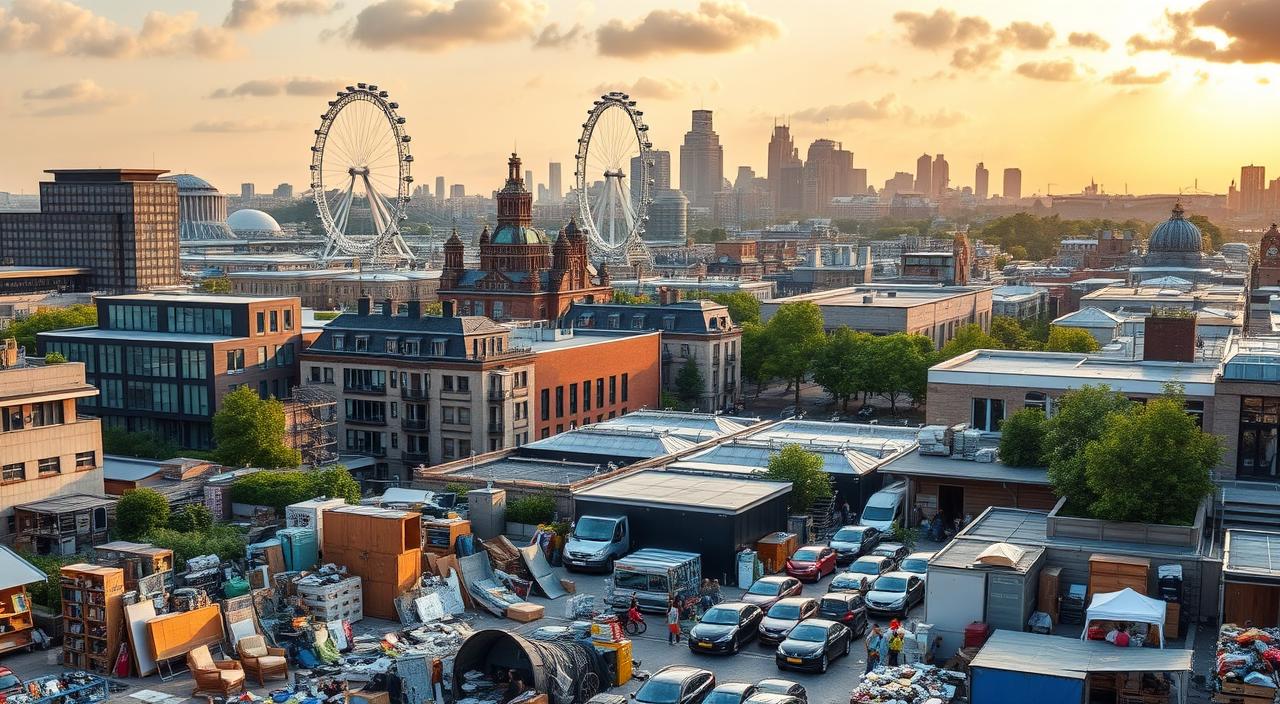 The city has developed a comprehensive framework to drive its transition to a regenerative economic model. This framework includes strategic partnerships, targeted programs, and a focus on high-impact sectors.
Strategic Partnerships for Global Impact
London has partnered with a leading global organization in circular economy practices to position itself within an international network of cities committed to sustainability. This collaboration facilitates knowledge sharing and fosters innovative solutions, strengthening the city’s leadership in this space. Learn more about global sustainability efforts at the Ellen MacArthur Foundation (external link).
The London Circular Economy Route Map
Introduced in 2017, the London Circular Economy Route Map provides a roadmap for the city’s transition. Developed with input from diverse stakeholders, it identifies five key focus areas for maximum impact:
| Focus Area | Description |
|---|---|
| Textiles | Enhancing sustainability in the textile industry |
| Plastics | Reducing plastic waste through innovative redesign |
| Built Environment | Promoting sustainable construction and design |
| Electronics | Encouraging reuse and recycling of electronic goods |
| Food | Minimizing food waste and improving food systems |
Programs like Resource London and Circular London support these areas by boosting recycling rates, reducing food waste, and promoting sustainable business models. By working with corporations and supporting small and medium-sized enterprises (SMEs), the city ensures practical implementation through policy development and collaboration. For tips on reducing waste in your business, check out our sustainable business practices guide.
Economic and Environmental Benefits of London’s Circular Economy
The circular economy in London delivers significant economic and environmental advantages, from job creation to reduced carbon emissions.
Economic Potential: £7 Billion by 2036
By 2036, London’s circular economy is projected to generate net benefits of at least £7 billion annually. Strategies such as modular construction, clothing rental services, food waste reduction, and increased recycling drive this economic potential. These initiatives not only save resources but also stimulate growth by creating new markets and opportunities.
Job Creation Through Innovative Business Models
The shift to a regenerative model is creating jobs in areas like repair, remanufacturing, recycling, and service-based businesses. Programs like the Sustainable Accelerator fund and the Circular London Accelerator support businesses in scaling up circular practices. These efforts are fostering a new wave of employment opportunities, particularly for SMEs transitioning to sustainable models. For more on how sustainability drives job growth, visit GreenBiz.
Environmental Impact: Reducing Carbon and Waste
Circular practices significantly reduce carbon emissions and environmental degradation. Investments, such as the £18 million allocated to carbon reduction schemes through the London Green Fund, contribute to cleaner air and lower pollution levels. By minimizing resource extraction and waste sent to landfills, the city is creating a more sustainable urban environment.
| Environmental Benefit | Impact |
|---|---|
| Reduced Carbon Emissions | Lower greenhouse gas output through circular practices |
| Decreased Resource Extraction | Less reliance on virgin materials |
| Reduced Landfill Waste | Less waste sent to landfills |
| Lower Pollution Levels | Cleaner air and water through sustainable systems |
How to Participate in London’s Circular Economy
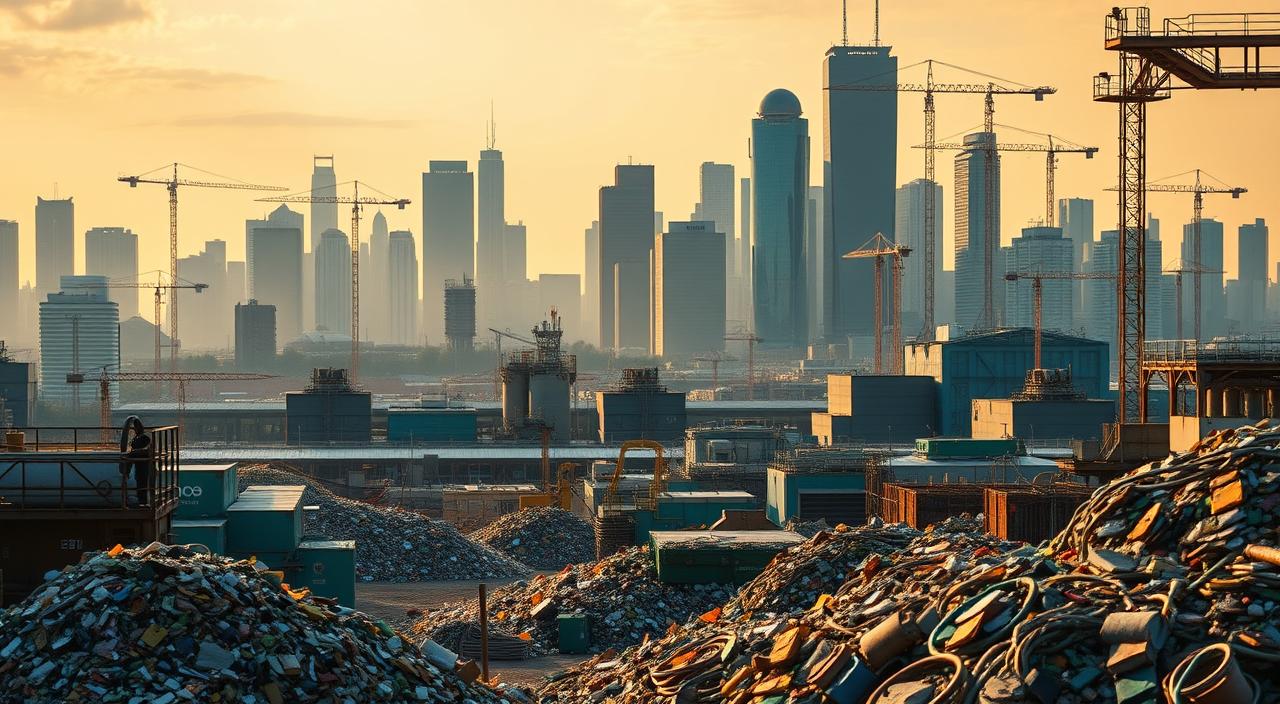 Businesses and residents alike can play a role in advancing the circular economy in London through targeted programs and everyday actions.
Business Opportunities and Support
The city offers robust support for businesses adopting sustainable models. Programs like Advance London, which assisted 160 businesses between 2017 and 2019, help companies scale up circular practices or transition from linear models. These initiatives provide value chain analysis, strategy development, and funding opportunities to drive innovation. Discover more about business sustainability at our guide to circular business models.
How Residents Can Embrace Circular Practices
Londoners can contribute to sustainability by adopting simple habits, such as:
- Reducing single-use plastics: Carry reusable bags, bottles, coffee cups, cutlery, and straws.
- Minimizing food waste: Campaigns like Eat Like a Londoner and Love Food Hate Waste offer tips for better food planning and storage.
For practical ways to reduce waste at home, explore WRAP’s sustainability resources.
Conclusion: Building a Circular Future for London
The circular economy in London is paving the way for a more sustainable, resilient, and inclusive city. By reducing waste, promoting sustainable design, and fostering collaboration between government, businesses, and residents, London is setting a global standard for urban sustainability. Strategic partnerships and initiatives like the London Circular Economy Route Map ensure the city remains a leader in this transformative movement. As London continues to innovate, its circular economy promises economic growth, job creation, and significant environmental benefits. By embracing these practices, residents and businesses can contribute to a greener, more prosperous future.