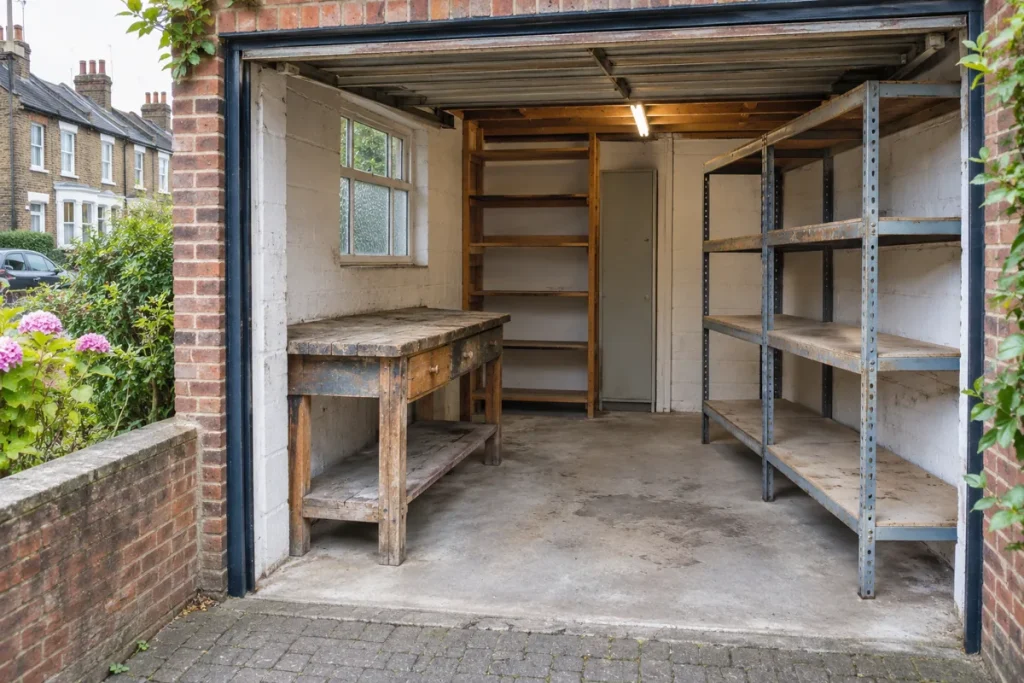
A photo from the driveway gives us a quick impression of a garage. A short list and a few closer photos tell us what the job actually involves. You can use the same checklist whether the garage is at your home, behind a block of flats or in a separate row of lock-ups.
Count the bulky pieces
List workbenches, cabinets, shelving, appliances and furniture separately from bags and boxes. Mention whether shelves are freestanding or attached and tell us if an item is unusually heavy. Show the full width of the opening and point out any item that may need to be discussed before we agree the quote.
Tell us where the vehicle can reach
Give us the postcode and directions to the garage entrance if it differs from the main address. Tell us about gates, driveway access and the distance to the loading point. For a lock-up, let us know who has the key and whether there are shared arrangements. These details help us assess your garage rubbish collection.
Confirm the items and access on the day
Check that the agreed items are accessible and identify anything staying. If the opening is blocked or the loading point has changed, contact us before the appointment. We can discuss the revised arrangements with you while the load is still in place.
Describe a lock-up as a separate address if needed
The postcode for your home may lead us to the front door while the garage opens onto another road. Send the name of that road, the row or bay number and a photo of the entrance. If there is a barrier, give us a contact who can meet us and confirm whether there is somewhere to load without blocking other garages.
When comparing collection providers, confirm who will actually take the waste and what they have agreed to collect. The Environment Agency’s public register lets you check a waste carrier by name or registration number. Keep those details with the agreed item list and any access instructions.
Related guide: Clearing a garage without losing useful tools.