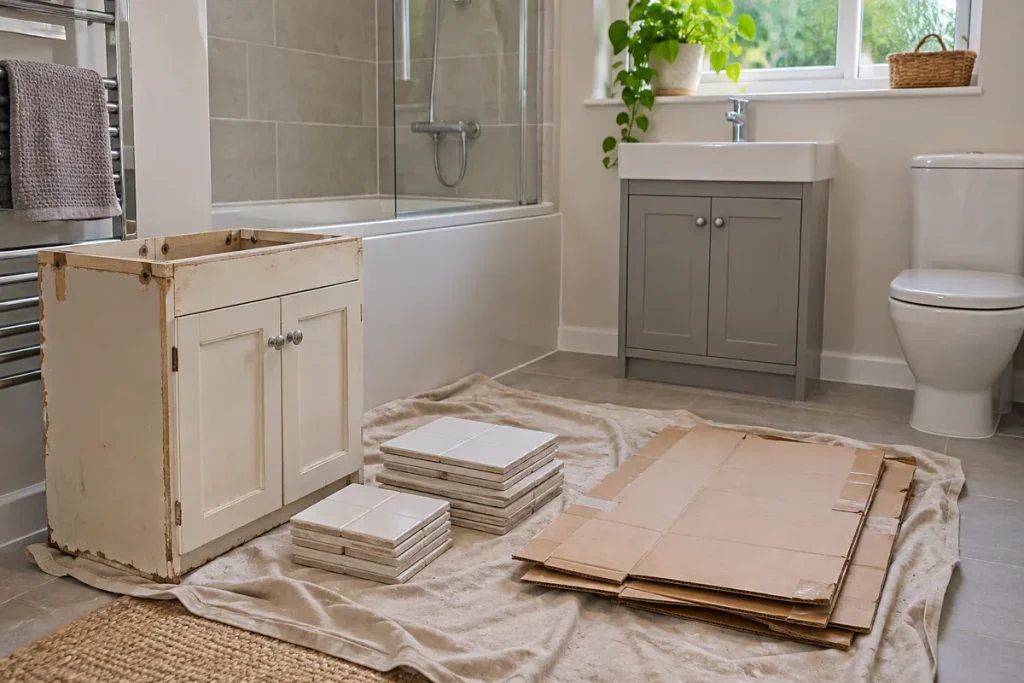
After a bathroom refit, the rubbish may include tiles, packaging, an old vanity and a bathroom suite. It helps to show these as separate groups. A photo of a heap covered in cardboard will not tell us how much rubble is underneath or whether a basin is still attached.
Separate the list by material
Note the number of rubble sacks, the loose tiles and the bulky fixtures. Include flattened packaging and offcuts as their own items. If you have plasterboard or material you cannot identify, mention it separately. We do not collect hazardous waste. If you are unsure what something is, flag it before discussing collection.
Tell us what is disconnected and ready
Send a photo of the old bath, basin or cabinet and say whether it has already been removed from its fittings. Tell us if any of it is upstairs or has to go through a narrow hall. Our builders waste collection service can assess the agreed building waste and loading arrangements from those details.
Check the finish date with the trades
Arrange collection once you know what will be ready. If the job is being done in stages, say which materials are included this time and what will be left for later. Photograph the full load once it is ready, and let us know if the list has changed since you first asked for a quote.
Agree which waste belongs to which job
Ask the tradesperson what is included in their quote. They may already be taking the old fixtures away, while the packaging from items you bought yourself is still on site. Make two lists so you can see who is dealing with each group, then send us only the items you want us to assess.
On a larger refit, mark the room and material in your notes. “Upstairs bathroom, four bags of broken tiles and a disconnected vanity” is a better starting point than a photo of the landing alone. The government’s waste duty of care code explains how responsibilities differ when waste is generated by a tradesperson.
Related guide: Why rubble and packaging need separate quotes.