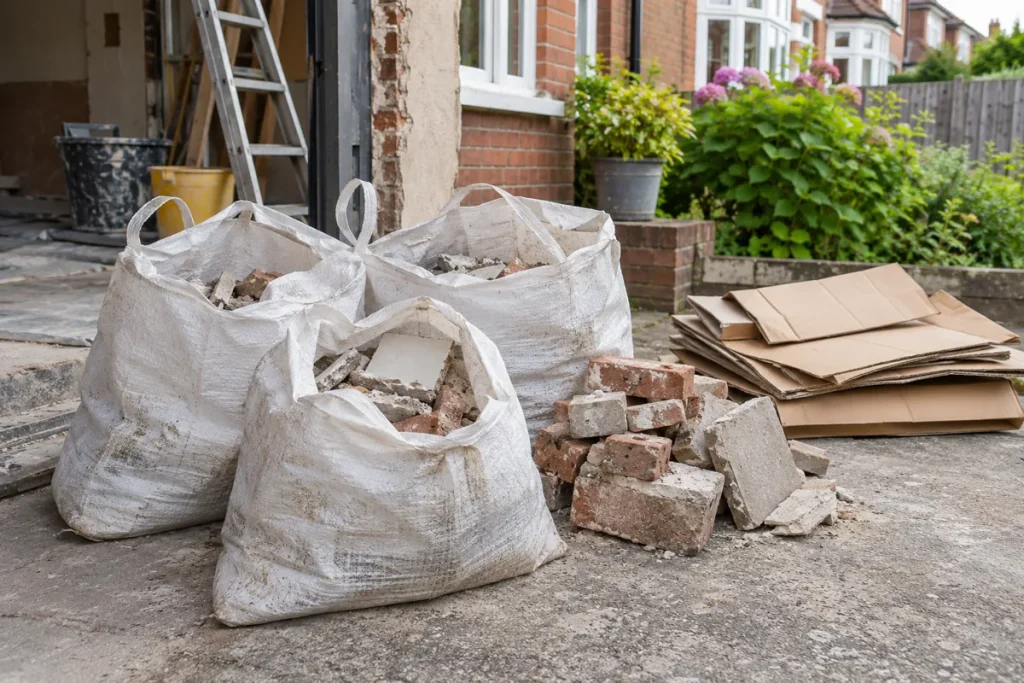
Two stacks of sacks can take up the same space and still be very different jobs. One may hold empty packaging, the other broken masonry or tiles. We need to know what is inside so we can assess the weight, the handling and how the items will be loaded.
Describe the contents rather than the bag colour
Count the bags and say what they contain. Mention loose material separately and show the full pile from a couple of angles. If bags contain a mix of brick, soil and packaging, tell us that. Please avoid adding unknown or hazardous materials to a general waste pile.
Include the carry from the work area
A pile on a driveway and a pile in a basement can need different arrangements. Tell us about stairs, the distance to the street and any loading restrictions you know about. When you ask us to collect rubble and builders waste, send those details along with the postcode and photos.
Flag extra waste before the visit
If another room is stripped out or more bags are added, update the list before collection day. We can look at the revised load and discuss any change to the quote. For loose rubble, tell us where it is and how much there is rather than moving it yourself just to take a photo.
Give us enough detail to assess the load
If the bags are already filled, tell us their approximate size and how full they are. Include a photo of any loose blocks or slabs. Keep the cardboard in the picture but identify it separately so we can distinguish the light material from what needs more care to load. If you cannot tell what is inside a bag, say so when you enquire.
A useful route description might be “five steps from the basement, one narrow turn and a short carry along the pavement”. For workplace jobs, the HSE construction manual handling guide explains why site conditions and repeated lifting belong in the plan.
Related guide: What to list for a bathroom refit collection.